
 Event · 14–16 October 2026
The Mindful Museum in Practice
What can a museum become when visitors are invited not only to look and learn, but also to pause, reflect, participate, and connect?
This question is at the heart of the RE-MIND Mindful Museum approach. The model explores how museums can become more inclusive, engaging, and supportive spaces by bringing together mindfulness, digital wellbeing, and intergenerational engagement.
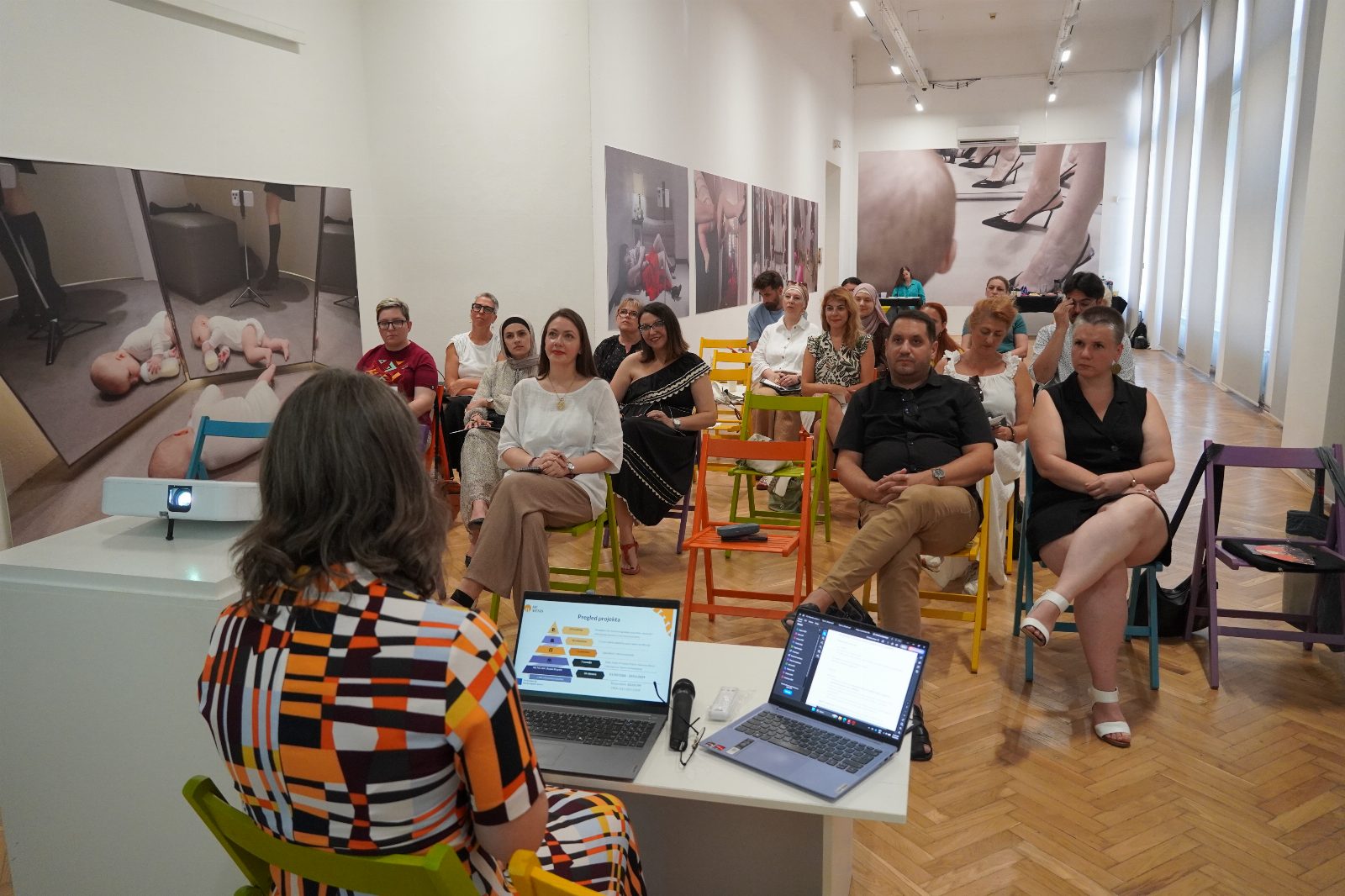
One example of this approach was explored in Sarajevo, where the RE-MIND project was presented at the National Gallery of Bosnia and Herzegovina in July 2026. The event brought together museum professionals, educators, students, artists, cultural and tourism workers, and other stakeholders to explore the potential of mindfulness in museum practice.
A central part of the discussion was museum theatre and its potential to create more active and meaningful relationships between visitors and cultural heritage. Rather than remaining passive observers, visitors can become participants in interpreting collections, creating meaning, and connecting heritage with their own experiences.
The Youth Museum Theatre programme at the National Gallery of Bosnia and Herzegovina provided a particularly relevant example. By connecting artworks from the museum collection with contemporary issues that matter to young people, participants developed their own performances. Through embodied learning, voice work, breathing, and concentration techniques, the museum became a space for personal reflection, creativity, dialogue, and collective expression.
This example illustrates an important principle of the Mindful Museum: mindfulness does not have to mean sitting quietly or meditating in a museum. It can also be expressed through the way people move, observe, interpret, communicate, create, and relate to one another.
RE-MIND builds on two complementary approaches to mindfulness — meditative and socio-cognitive mindfulness. Together, they encourage conscious presence and attention while also supporting curiosity, interpretation, reflection, and meaning-making. These principles can be integrated into museum education, audience engagement, outreach, visitor experiences, and digitally balanced interactions.
Over the course of the project, the Mindful Museum model will be further developed, tested, and validated across different European museum contexts. Through training, experimentation, intergenerational activities, and knowledge exchange, RE-MIND aims to provide museum professionals with practical approaches for creating experiences that are more reflective, participatory, inclusive, and connected to the wellbeing of their audiences.